

When to Replace Your Trailer Brake Shoes
- Posted on
- By Fieldfare Trailer Centre
- Posted in maintenance guides, trailer brake shoes, trailer brakes, trailer servicing
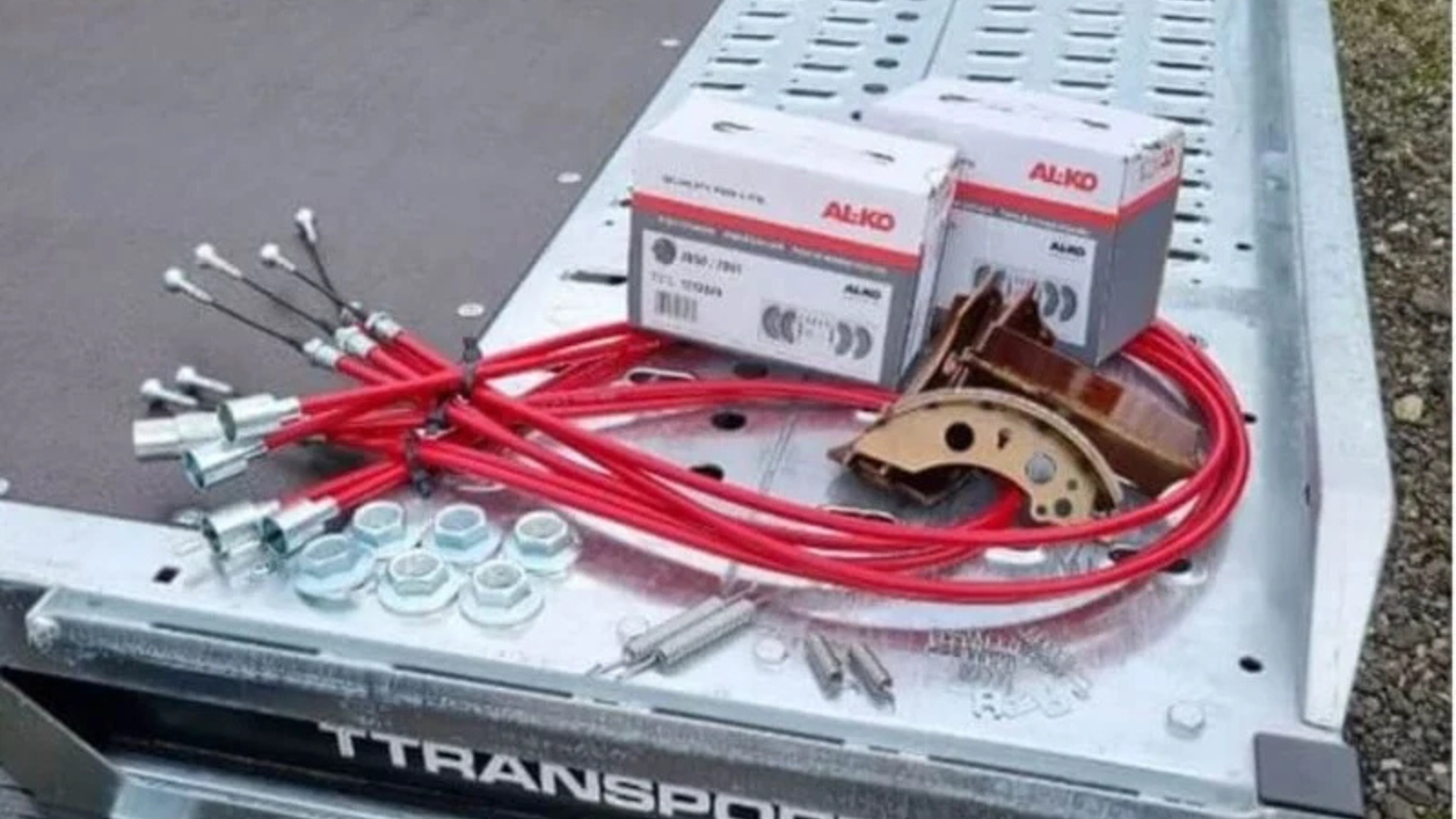
Not sure when to replace your trailer brake shoes? Learn the warning signs, when to arrange an inspection and how Fieldfare can help.
Trailer brake shoes do not have one fixed replacement age or mileage. How quickly they wear depends on the trailer, its load, how often it is used, the journeys it makes, adjustment, storage and the condition of the rest of the braking system. The safest approach is regular inspection and prompt attention to any change in braking performance.
This guide explains the common signs of worn trailer brake shoes, what a workshop checks and when to arrange an inspection. If you are unsure, avoid towing until the braking system has been assessed by a competent trailer technician.
Quick answer: when should trailer brake shoes be replaced?
Replace trailer brake shoes when inspection shows that the friction material has reached the manufacturer’s wear limit, is cracked, separating, contaminated, badly glazed or wearing unevenly. They may also need attention if the trailer pulls to one side, braking feels weaker, a wheel runs unusually hot or there are scraping or grinding noises. Exact limits vary, so the brake manufacturer’s specification must be followed.
What do trailer brake shoes do?
On a braked trailer, the brake shoes sit inside the brake drum. When the overrun braking system operates, the shoes press against the inside of the drum to slow the trailer. The shoes, drums, cables, linkages, overrun mechanism and adjustment all have to work together. A problem that feels like worn shoes may therefore be caused by another part of the system, which is why a proper inspection matters.
Signs your trailer brake shoes may need attention
Book an inspection if you notice any of the following:
- Reduced braking performance: the trailer feels less controlled or takes longer to slow.
- Pulling or uneven braking: the trailer appears to brake more strongly on one side.
- Scraping, grinding or unusual noises: noises from a wheel or drum should not be ignored.
- Overheating: one hub or wheel is noticeably hotter than the others after a journey.
- Dragging brakes: a wheel does not rotate freely when it should, or the trailer feels reluctant to move.
- Excessive overrun travel: more movement than usual is needed before the brakes respond.
- Poor handbrake performance: the handbrake no longer holds the trailer as expected.
Important: these symptoms are not a diagnosis on their own. Incorrect adjustment, damaged cables, worn drums, bearings or problems in the overrun mechanism can produce similar warning signs.
What does a brake inspection look for?
A competent technician will identify the brake type and assess the complete system rather than judging the shoes in isolation. Checks may include:
| Area checked | What the technician is looking for |
|---|---|
| Brake shoes | Remaining friction material, cracks, separation, glazing, contamination and uneven wear. |
| Brake drums | Scoring, heat damage, wear and whether the internal surface remains within specification. |
| Cables and linkages | Free movement, corrosion, damage, incorrect adjustment and worn connections. |
| Auto-reverse and adjusters | Correct operation, condition and adjustment for the particular brake system. |
| Bearings and hubs | Wear, damage or other issues found while the hubs are removed. |
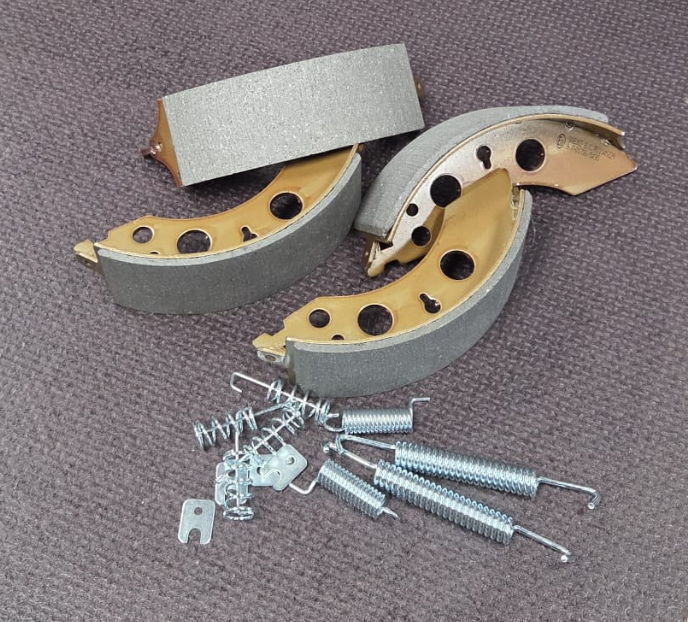
Fieldfare’s trailer servicing procedure includes removing the wheels and hubs, checking brake shoes and drums for damage, cleaning the braking components, checking the auto-reverse mechanism, inspecting cables and linkages and readjusting the brakes and cables as required.
How often should trailer brakes be checked?
Follow the service schedule and inspection intervals specified by the trailer, axle or brake manufacturer. Self-adjusting brakes still require maintenance and inspection. Usage also matters: frequent towing, heavy loads, hilly routes, long periods in storage and exposure to water or road salt can justify more frequent checks.
Arrange an additional inspection before a long journey, after buying a used trailer with an uncertain service history, after the trailer has been standing for a long time, or whenever braking behaviour changes.
Should brake shoes be replaced on both wheels of an axle?
Brake components on the same axle need to operate evenly. If one side is worn or contaminated, the technician should inspect both sides and assess the drums, adjusters, cables and related parts. Brake shoes are commonly supplied as axle sets, but the correct repair depends on the brake system and what the inspection finds. Fieldfare can identify the appropriate parts and advise on the work required.
Can I replace trailer brake shoes myself?
Trailer brakes are safety-critical. Correct identification, fitting, adjustment and testing are essential, and brake shoes with similar dimensions may not fit the same make or brake assembly. If you are not trained and equipped for the work, use a competent trailer workshop.
If you already know the exact brake specification you require, browse Fieldfare’s range of trailer brake shoes and axle sets. Fieldfare is unable to fit customer-supplied parts or spares, so please speak to the workshop before buying parts for a booked repair.
Why choose an NTTA Trusted Workshop?
Fieldfare Trailer Centre is listed by the National Trailer and Towing Association as an NTTA member and Trusted Workshop. The NTTA describes its Trusted Workshop scheme as a customer-care quality programme promoting workshop best practice, professional workmanship and high service standards. Participating workshops are independently assessed annually across areas including customer service, workshop practice, staff knowledge and training, facilities and equipment.
Trailer brake shoe FAQs
How long do trailer brake shoes last?
There is no reliable universal mileage or age. Wear depends on use, load, terrain, adjustment, storage and the condition of the complete braking system. Inspection is more dependable than replacing them according to a generic timetable.
Is there one minimum brake shoe thickness for every trailer?
No. Wear limits vary between manufacturers and brake assemblies. The technician should identify the fitted brake and use the correct manufacturer’s specification.
Can contaminated brake shoes be cleaned and reused?
Oil or grease contamination can seriously affect friction material. The cause of the contamination must be found and the affected components assessed. Replacement may be required; do not assume cleaning alone makes the brake safe.
Can I book a brake inspection without a full service?
Contact Fieldfare to discuss the symptoms and whether a targeted brake inspection or a full trailer service is most appropriate. The workshop can explain the suitable next step and provide a quotation.
What if my trailer brakes are making a grinding noise?
Stop using the trailer and arrange an inspection. Continuing to tow may cause further damage and could make the trailer unsafe.
Book a trailer brake inspection or service
If your trailer’s braking has changed or its service history is uncertain, contact Fieldfare Trailer Centre near Salisbury to discuss a brake inspection or full service.
Telephone: 01980 611853, option 4
Online: Use the Fieldfare contact form
This guide provides general information only. Always follow the instructions and service intervals for your trailer and brake system. If you suspect a braking fault, do not tow the trailer until it has been checked by a competent person.