

Trailer Lights Buying Guide: Which Type Do You Need & How to Wire Them
- Posted on
- By Fieldfare Trailer Centre
- Posted in buying guides, trailer lights, trailer parts, trailer wiring
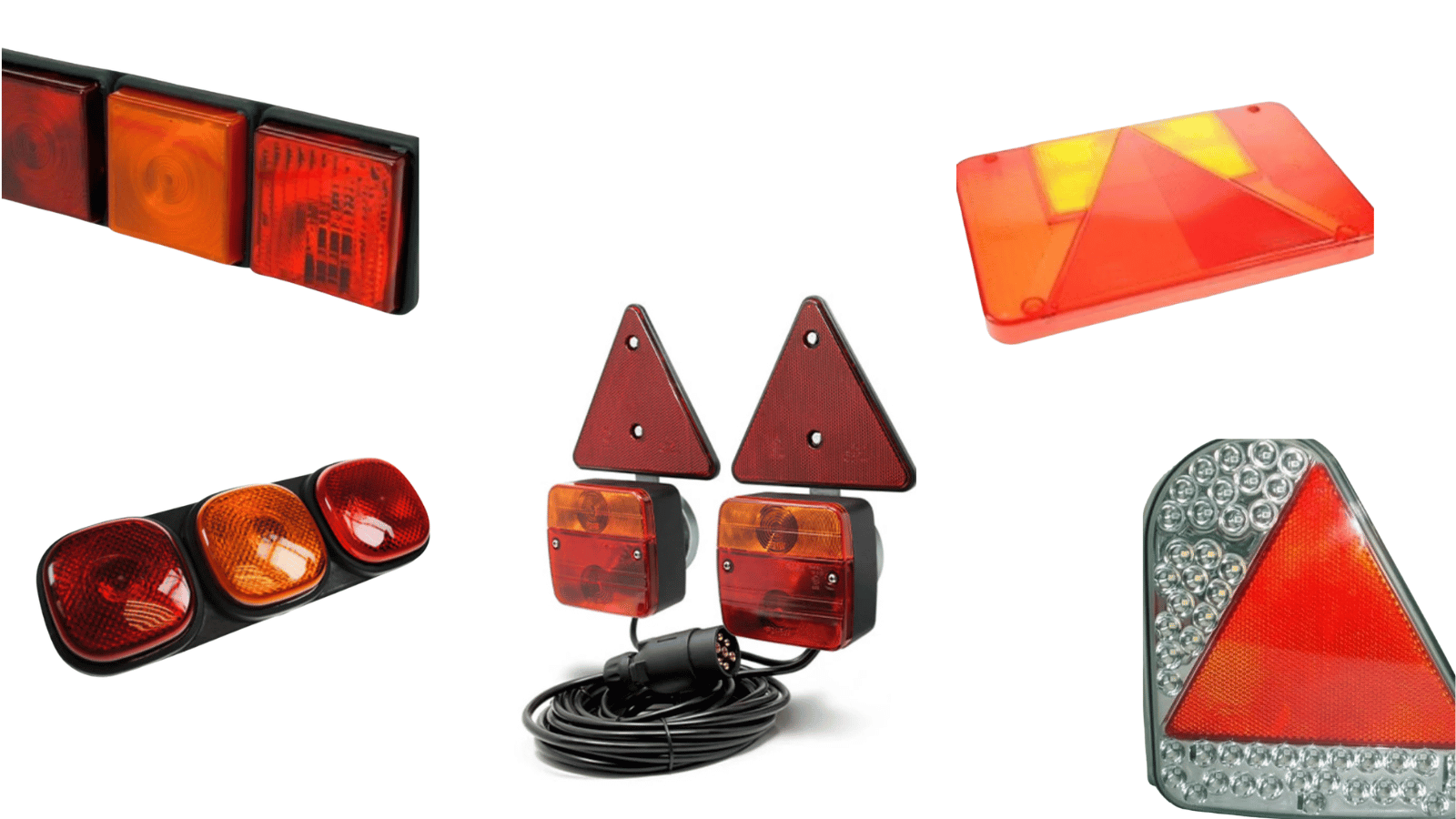
Choosing trailer lights is easier when you know how the trailer will be used. This guide compares LED and standard lamps, magnetic and permanent fittings, and explains the basic 7-pin wiring colours.
Not sure which trailer lights you need? The right choice depends on your trailer, how often it is used and whether you need a temporary or permanent installation. This guide compares the main options and explains the basic wiring for a common 7-pin trailer plug.
Which trailer lights do you need?
Most road trailers need rear position lights, brake lights, direction indicators, a number-plate light, a rear fog light where required, and the correct reflectors. Larger or specialist trailers may also need front, side or outline marker lights.
Always choose road-approved lamps that suit the trailer and remain clearly visible. Requirements can vary with a trailer's age, dimensions and weight, so check the applicable rules or ask a trailer specialist if you are unsure.
LED or standard bulb trailer lights?
LED trailer lights
- Use less power and place less load on the towing vehicle's lighting circuit.
- Usually last longer and resist vibration better than traditional bulbs.
- Illuminate quickly and provide a crisp, bright light.
- Sealed units can offer good protection from water and road dirt.
LED lights are a strong choice for frequently used trailers, commercial applications and wet or dirty conditions. Some vehicles may need a compatible bypass relay or control module to prevent warning messages or rapid indicator flashing.
Standard bulb lights
- Generally inexpensive to buy and straightforward to replace.
- Easy to troubleshoot because individual bulbs can be changed.
- Suitable for many older trailers and occasional-use applications.
Bulbs are more vulnerable to vibration, corrosion and failed connections. Carrying spares is sensible if the trailer is used regularly.
Magnetic or permanently fitted lights?
Magnetic trailer lights
A magnetic lighting board or magnetic lamp set is useful when the lights need to be removed after use. Typical applications include recovery work, agricultural equipment and trailers without convenient permanent mounting points.
Magnets must sit on a clean, secure steel surface. Route and secure the cable carefully so it cannot trail, chafe, become trapped or touch a hot component.
Permanently fitted lights
Fixed lamp clusters are normally the best long-term solution. They produce a neater installation, keep wiring protected and reduce the chance of a light moving during a journey. Choose individual lamps when only one function needs replacing, or a combined cluster when you want several functions in one unit.
Lighting boards, lamp clusters and individual lamps
- Lighting boards: a convenient complete solution for temporary use or simple trailers.
- Combined lamp clusters: several lighting functions housed in one permanent unit.
- Individual lamps: useful for replacing one function or building a custom installation.
- Marker lights: improve visibility of the trailer's width or length and may be required on larger trailers.
- Number-plate lights: illuminate the trailer's rear registration plate.
7-pin or 13-pin trailer electrics?
A traditional 7-pin connector carries the essential road-lighting functions for a straightforward trailer. A 13-pin connector supports additional functions, including reversing lights and auxiliary power where the vehicle and trailer are equipped for them.
Match the plug to the towing vehicle and the functions the trailer actually requires. Adapters can connect different plug types, but they cannot create a circuit or function that is not present on one side.
Basic 7-pin trailer-light wiring guide
The common ISO 1724 7-pin arrangement uses these functions and wire colours:
| Pin | Wire colour | Function |
|---|---|---|
| 1 | Yellow | Left indicator |
| 2 | Blue | Rear fog light |
| 3 | White | Earth/common return |
| 4 | Green | Right indicator |
| 5 | Brown | Right-hand tail, marker and number-plate light |
| 6 | Red | Brake lights |
| 7 | Black | Left-hand tail, marker and number-plate light |
Important: pin positions look different depending on whether you are viewing the front or wiring side of a plug or socket. Follow the terminal numbers moulded into the connector rather than relying on position alone. Older or repaired trailers may not follow the expected colours, so test and identify each circuit before reconnecting it.
How to wire trailer lights safely
- Identify the connector and circuits. Confirm whether the trailer uses a 7-pin or 13-pin system and check every cable.
- Disconnect the electrical supply. Unplug the trailer and isolate any auxiliary battery before working.
- Plan the cable route. Keep wiring away from sharp edges, moving parts, heat and crushing points.
- Make secure, weather-resistant connections. Use suitable connectors, insulation and protective sleeving.
- Check the earth connection. A poor earth commonly causes dim, intermittent or cross-feeding lights.
- Protect and secure the loom. Use suitable clips and grommets, allowing movement at hinges and tilt points.
- Test every function. Check side lights, brake lights, indicators, hazards, fog light and number-plate illumination before towing.
Modern vehicles often use sensitive lighting-control systems. A vehicle-specific or universal bypass relay may be required; uncertain towbar wiring should be handled by a qualified installer.
Common trailer-lighting faults
- No lights work: check the vehicle socket, trailer plug, fuse and main earth.
- Lights are dim or several functions flash together: inspect the earth connection first.
- One function has failed: check the bulb or LED unit, terminal and continuity of that circuit.
- Intermittent operation: look for corrosion, loose pins, damaged cable or strain at the plug.
- Vehicle warning message or rapid flashing: confirm that the LED lamps and towing-electrics module are compatible.
Choosing the best option
- Choose LED lamps for durability, efficiency and frequent use.
- Choose standard bulb lamps for a simple, economical and easily repairable setup.
- Choose magnetic lights or a lighting board for temporary applications.
- Choose permanent lamp clusters for a tidy, dependable long-term installation.
- Choose a 13-pin system when reversing lights or auxiliary functions are required.
Frequently asked questions about trailer lights
Can I replace standard trailer bulbs with LED lights?
Often, yes, but the LED lamps must provide the correct road-lighting functions, suit the trailer's voltage and mounting arrangement, and be compatible with the towing vehicle. Some vehicles may also need a suitable bypass relay or control module.
Do LED trailer lights need a bypass relay?
Not in every installation. It depends on the towing vehicle and how its lighting system monitors electrical load. If LED lights cause a dashboard warning or rapid indicator flashing, a compatible towing-electrics module or bypass relay may be required.
What is the difference between 7-pin and 13-pin trailer electrics?
A 7-pin connection normally covers the essential road lights. A 13-pin connection can also support functions such as reversing lights and auxiliary power, where the towing vehicle and trailer are equipped for them.
Why do several trailer lights flash or glow together?
A poor earth connection is a common cause. Also check for corrosion, loose terminals, damaged cable and moisture inside the plug, socket or lamp unit.
Can I use magnetic trailer lights on the road?
Magnetic lights can be suitable for temporary use when the lamps and number plate remain correctly positioned and clearly visible, the magnets are secure, and the cable cannot drag, chafe or become trapped. The complete lighting setup must still meet the requirements that apply to the trailer.
How do I know which replacement trailer light will fit?
Compare the light's functions, voltage, overall dimensions, mounting-hole spacing, connector or cable arrangement and left- or right-hand position. If you are unsure, provide the trailer model and photographs of the existing light and connections.
Shop trailer lights and wiring parts
Browse Fieldfare's trailer lamps, lighting boards, reflectors, plugs, sockets and wiring accessories, or contact us if you need help matching a part to your trailer.