

How to Secure a Trailer from Theft: Wheel Clamps and Hitch Locks
- Posted on
- By Fieldfare Trailer Centre
- Posted in buying guides, trailer hitch locks, trailer security, trailer wheel clamps
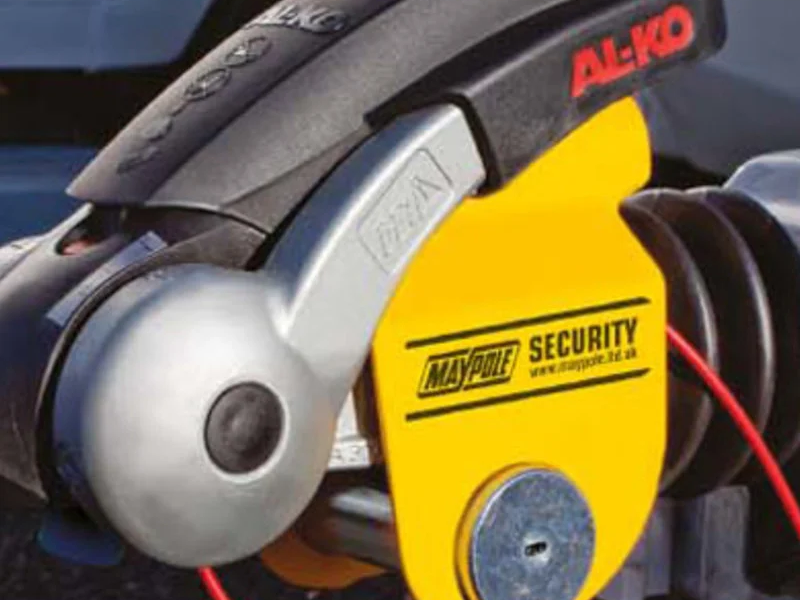
Learn how to secure a trailer from theft, choose a compatible hitch lock or wheel clamp and avoid common buying and fitting mistakes.
The best way to secure a trailer from theft is to make it difficult to hitch, move or strip for parts. In most cases, that means using a hitch lock and a suitable wheel clamp together, then adding further security where the trailer is stored.
The right equipment depends on the coupling, wheel and tyre size, whether the trailer is braked, and where it spends most of its time. This guide explains what to check before you buy and how to use each type of lock properly.
Quick answer: how do you secure a trailer from being stolen?
Use more than one visible security device. A correctly fitted hitch lock prevents straightforward connection to a tow vehicle, while a wheel clamp stops the wheel from turning and can cover the wheel nuts. At home or in long-term storage, add a secured post, ground anchor or strong chain where appropriate.
Check your insurance policy before choosing a product. Some insurers specify the type, approval or number of devices that must be used whenever the trailer is unattended.
Wheel clamp or hitch lock: which is better?
The two devices protect different parts of the trailer. A hitch lock blocks or encloses the coupling so that it cannot easily be attached to another vehicle. A wheel clamp immobilises a wheel and may also prevent access to the wheel nuts.
| Security device | What it protects | What to check |
|---|---|---|
| Hitch lock | Makes it harder to connect the trailer to another tow vehicle. | Coupling manufacturer, model, shape, shaft size and whether the trailer is braked. |
| Wheel clamp | Stops the wheel rotating and may shield the wheel fixings. | Rim diameter, tyre size and width, steel or alloy wheel, wheel shape and available clearance. |
| Chain, post or ground anchor | Secures the trailer to a fixed point while it is stored. | A suitable anchor point, chain length, lock protection and the storage surface. |
A hitch lock is quick to use, but it does not stop a trailer being moved by other means. A wheel clamp adds a second obstacle. Using both gives a thief more work to do, requires different tools and makes the trailer look less attractive than an unsecured one nearby.
What is the best trailer hitch lock in the UK?
There is no single hitch lock that fits every trailer. The best one is a close-fitting model made for your coupling, used in the way the manufacturer specifies. A heavy lock is not automatically the right lock if it leaves gaps, interferes with the stabiliser or does not cover the vulnerable parts of the hitch.
Start by finding the manufacturer and model marked on the coupling head. Common trailer couplings include AL-KO, Knott, Bradley, Avonride and Indespension designs. The same trailer manufacturer may use different couplings across its range, so choosing from the trailer badge alone is unreliable.
Fieldfare stocks model-specific Bulldog and SAS hitch locks, locks for braked and unbraked couplings, universal coupling locks and heavy-duty towing-eye locks. Browse the trailer hitch-lock range, or contact the team with a clear photograph of the coupling and any model markings if you are unsure.
What hitch lock do I need?
Before ordering, check:
- The coupling make and model: look for a cast or stamped name and number on the coupling head.
- Whether the trailer is braked: braked and unbraked couplings differ in shape and operation.
- The coupling shaft: some locks are designed around a particular round or square shaft size.
- Handles and stabilisers: these change the space available around the coupling.
- How you intend to use it: check whether the lock is approved for use only when unhitched, when hitched and parked, or in another specific situation.
A universal lock can be useful for a standard 50mm coupling, but a dedicated lock normally gives a closer fit. If the trailer has a towing eye rather than a ball coupling, use a towing-eye lock designed for that eye size.
How to fit a trailer hitch lock
Designs vary, so the instructions supplied with the lock take priority. The usual process is:
- Park on firm, level ground and make sure the trailer cannot move.
- Check that the lock, coupling and keyway are clean and undamaged.
- Place the supplied security ball or lower section into the coupling if the design uses one.
- Fit the main body so that it encloses the areas shown in the manufacturer's instructions.
- Insert and lock the retaining bar, pin or barrel.
- Remove the key and pull firmly on the lock to confirm that it is engaged.
Do not force a lock that does not sit correctly. A poor fit may mean that you have the wrong model, the lock is fitted in the wrong position or another part of the coupling is obstructing it.
Can a trailer hitch lock be used when attached to the car?
Some hitch locks are designed to fit while the trailer is coupled to the tow vehicle. This can provide extra protection while the outfit is parked, such as during a rest stop. Other designs must only be used when the trailer is unhitched.
Being able to fit a lock while hitched does not automatically mean that it can remain fitted while towing. Check the instructions for the exact lock and coupling. If the manufacturer does not clearly approve use on the road, remove the lock before moving off. It must not restrict coupling movement, prevent an emergency disconnection or interfere with safe towing.
How to choose a trailer wheel clamp
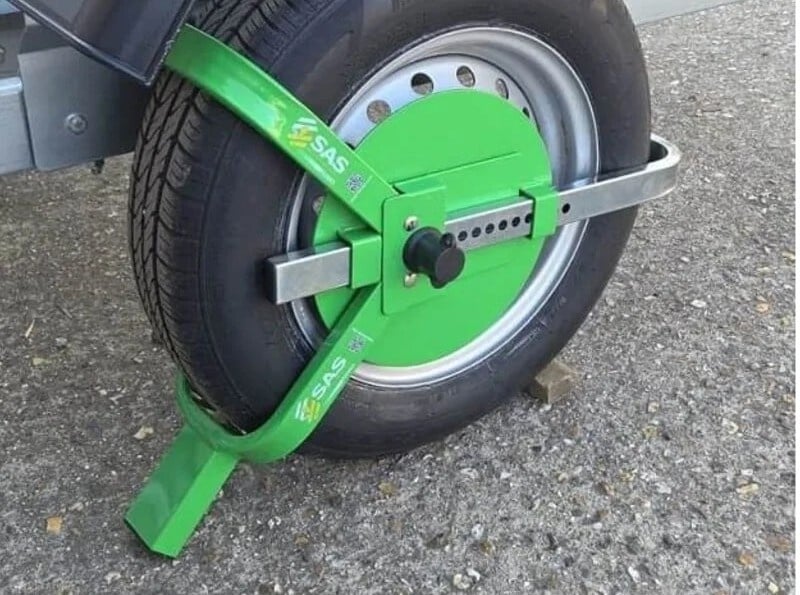
Wheel clamps range from compact claws to full-face designs that cover the wheel fixings. A small, light clamp can be convenient for frequent stops. For longer-term storage, many owners prefer a more substantial design that covers the wheel nuts and cannot simply be removed by deflating the tyre.
Check whether the product suits steel wheels, alloy wheels or both. Also look at the tyre-width range, overall wheel diameter, rim profile and clearance around the wheel arch. Some clamps are made for centrally dished 8, 10 or 12-inch trailer wheels, while others suit larger road wheels or flotation tyres.
Fieldfare's trailer wheel-clamp range includes SAS and Bulldog models for small domestic trailers, camping and jet-ski trailers, Brian James and Ifor Williams applications, alloy wheels, steel wheels and larger tyres.
What types of trailer wheel clamp are available?
The shape of the clamp affects how quickly it can be fitted, how much room it takes up in storage and which parts of the wheel it protects.
| Clamp type | How it works | Points to consider |
|---|---|---|
| Claw-style clamp | Adjustable arms grip around the tyre and prevent the wheel from rotating. | Usually compact and quick to fit. Check whether the design also protects the wheel fixings and remains secure if the tyre is deflated. |
| Full-face clamp | A large plate covers the centre of the wheel while arms secure the clamp around the tyre. | The plate can shield wheel nuts or bolts. Confirm that the product is suitable for the wheel material and has protective contact points for alloy wheels. |
| Through-wheel lock | A locking bar passes through an opening in the wheel and prevents rotation against the chassis or suspension. | Wheel openings and the position of nearby components determine compatibility. These locks are not suitable for every steel or alloy wheel. |
| Model-specific clamp | The clamp is shaped and sized for a particular wheel, tyre or trailer application. | A close fit can improve security and ease of use, but the exact tyre size and wheel specification must match the product listing. |
How to measure a trailer wheel for a clamp
Use the tyre markings and the clamp manufacturer's sizing guide. Record:
- the full tyre size printed on the sidewall;
- the wheel or rim diameter;
- the tyre width;
- whether the wheel is steel or alloy;
- the wheel shape, depth and available space around the tyre.
Do not rely on rim diameter alone. Two tyres fitted to the same rim size can have different widths and outside diameters. Photographs of the complete wheel, the tyre markings and the wheel centre can help Fieldfare identify suitable options.
Match the security to the trailer
| Trailer or situation | Useful starting point |
|---|---|
| Small domestic, camping or jet-ski trailer | A compact clamp sized for small centrally dished wheels, plus a lock matched to the coupling. |
| Car transporter or commercial trailer | A model-specific hitch lock and a robust wheel clamp that protects the wheel fixings. |
| Plant trailer with a towing eye | A correctly sized towing-eye lock, supported by a wheel clamp, chain or secure post where appropriate. |
| Trailer kept at home or in a yard | Layered security, good lighting and positioning that makes the coupling difficult to reach. |
| Short stops while travelling | A quick-fitting device specifically approved for the way the trailer is parked and coupled. |
What do Sold Secure and insurance approved mean?
Sold Secure independently tests security products against defined attack methods and awards ratings for different product categories. If a listing states that a lock has a Sold Secure rating, check that the approval applies to the exact model rather than assuming that every product from the same manufacturer has it.
Insurance requirements vary. Your policy may specify an approved hitch lock, wheel clamp or both, and it may set conditions for storage and unattended trailers. Keep receipts, key numbers and photographs of fitted security devices. Ask the insurer if any part of the wording is unclear.
Other ways to secure a trailer
A hitch lock and wheel clamp are a sensible starting point, but trailers kept at home, on a driveway or in a yard can benefit from further layers of security.
- Locking wheel nuts or bolts: these make it harder to remove a wheel and leave the clamp behind. Check the thread, seat shape and length against the original fixing.
- Chains and padlocks: a suitable chain can secure the trailer to a strong fixed point. Keep it clear of the ground where possible and avoid leaving unnecessary slack.
- Security posts and ground anchors: a correctly installed post or anchor provides a fixed obstacle on a driveway or yard.
- Security marking: a trailer-marking kit such as Datatag can provide a permanent identity and act as a visible deterrent.
- Alarms and trackers: electronic security can alert the owner or help locate a stolen trailer, but it works best alongside physical locks.
- Storage position: park behind a locked gate or another vehicle where practical, keep the coupling difficult to access and use lighting or CCTV around the storage area.
Fieldfare also stocks trailer-security accessories, including locking wheel fixings, chains, padlocks, security posts and Datatag marking kits.
Common trailer-security mistakes
- Buying by trailer make without checking the fitted coupling or wheel.
- Choosing a clamp that leaves the wheel nuts or tyre valve unnecessarily exposed.
- Leaving enough slack or space for tools to be inserted around a lock.
- Assuming a universal product fits every coupling.
- Using only one security device on a valuable trailer.
- Leaving spare keys or identifying key details with the trailer.
- Failing to check the lock regularly for corrosion, damage or dirt in the locking mechanism.
Trailer security FAQs
Do I need both a wheel clamp and a hitch lock?
Using both gives better protection because each device blocks a different theft method. Your insurer may also require both when the trailer is unattended.
Are trailer hitch locks universal?
No. Universal locks fit a range of standard couplings, but many trailers need a lock made for a particular coupling head, handle or shaft.
Can a wheel clamp damage an alloy wheel?
Use a clamp stated to be suitable for alloy wheels and fit any supplied protective pads. Dirt trapped between the clamp and wheel can mark the finish, so clean the contact points before fitting.
Should I secure an empty trailer?
Yes. An empty trailer is still valuable, easier to move and may be stolen for resale, parts or use in another crime.
What if I cannot identify my coupling or wheel size?
Photograph the coupling from several angles, include any cast or stamped markings, and take a clear picture of the tyre sidewall. Fieldfare can use those details to help narrow down compatible products.
Need help choosing trailer security?
Fieldfare Trailer Centre stocks wheel clamps, hitch locks, coupling locks, chains and related trailer-security products. Contact the team with your trailer details, coupling markings and wheel size if you need help checking compatibility.
Telephone: 01980 611853
Online: Use the Fieldfare contact form
This guide provides general security information. Always follow the lock manufacturer's fitting and usage instructions and check the requirements of your insurance policy. No security device can guarantee that a trailer will not be stolen.